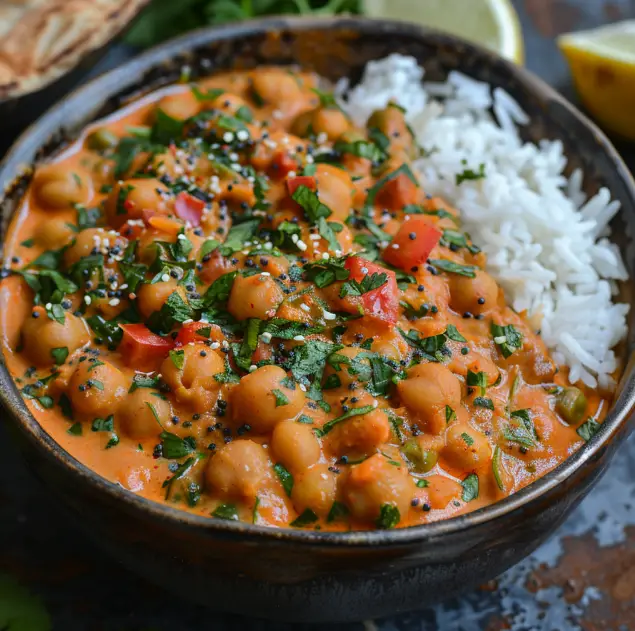
Creamy Coconut Chickpea Curry
you want something cozy, creamy, and comforting… without standing over the stove for an hour and pretending you’re on a cooking show?
Enter: Creamy Coconut Chickpea Curry aka the “I want takeout vibes but my wallet said no” dinner.
This is the kind of recipe you throw together with pantry stuff and somehow it tastes like you actually tried. It’s rich, flavorful, gently spiced (or very spiced, your call), and perfect for spooning over a big bowl of rice and eating on the couch like the royalty you are.
Why This Recipe is Awesome
Let’s break down why this curry deserves a permanent spot in your “I don’t know what to cook” rotation:
- It’s mostly pantry ingredients. Chickpeas, canned tomatoes, coconut milk, and some spices. Boom. Even if your fridge is a sad, empty tundra, you can probably still make this.
- It tastes way more effort-y than it is. You sauté some aromatics, dump things in a pot, simmer a bit, and suddenly you’ve got comfort food in a bowl.
- It’s naturally vegan and super filling. Between the chickpeas, coconut milk, and rice, you’re not walking away hungry.
- Perfect for meal prep. This curry tastes even better the next day. The flavors deepen, and your future self will thank you.
- Very forgiving. No precision chef skills required. If you can stir a pot and not burn garlic, you’re golden.
In short: it’s simple, cozy, and kind of impressive. It’s also barely any more work than heating up a frozen dinner, but it looks like you actually care about yourself.
Ingredients You’ll Need
Nothing weird, nothing fancy. Just big flavor from simple stuff.
Main Curry
- 2 tablespoons oil (coconut, canola, or any neutral oil) – we’re here for sizzle, not health halo
- 1 medium onion, finely chopped – the flavor base a.k.a. the thing you always wish you had pre-chopped
- 3–4 cloves garlic, minced – measure with your soul
- 1 tablespoon fresh ginger, grated – optional but highly recommended for that warm, “wow what is that?” flavor
- 1–2 tablespoons curry powder – mild or hot, you pick your spice level
- 1 teaspoon ground cumin – because we’re not playing with blandness today
- ½ teaspoon ground turmeric – for color and glow-up energy
- ¼–½ teaspoon chili flakes or cayenne (optional) – for people who like a little chaos
- 2 cans (15 oz / 400 g each) chickpeas, drained and rinsed – the hearty, protein-packed star
- 1 can (14 oz / 400 g) coconut milk (full fat) – the creamy queen of the recipe
- 1 can (14–15 oz / 400 g) diced tomatoes – adds tang and depth
- ½–1 cup vegetable broth or water – to thin things out if needed
- 1–2 tablespoons tomato paste – for richness and extra flavor punch
- Salt and black pepper, to taste – obviously, we season our food here
Finishing Touches
- Juice of ½–1 lime – for brightness and balance
- Fresh cilantro, chopped – unless you’re one of those “it tastes like soap” people
- Pinch of sugar or maple syrup (optional) – if things taste a little too acidic
To Serve
- Cooked rice (white, jasmine, basmati, or brown) – your comfy carb base
- Or naan/flatbread – for scooping, dunking, and generally living your best life
Step-by-Step Instructions
1. Get the Aromatics Going
- Heat the oil in a large pot or deep pan over medium heat.
- Add the chopped onion and cook for about 5–7 minutes, stirring now and then, until it turns soft and lightly golden. If it starts to brown too fast, lower the heat. We want sweet, not burnt.
- Add the garlic and ginger and cook for another 30 seconds–1 minute, just until fragrant. Yes, your kitchen should smell amazing right now.
2. Toast the Spices
- Sprinkle in the curry powder, cumin, turmeric, and chili flakes/cayenne if using.
- Stir constantly for about 30–60 seconds. This wakes up the spices and makes them way more flavorful.
- If the pan looks too dry or things start sticking, splash in a tablespoon of water or a tiny bit more oil. No burning allowed.
3. Build the Sauce
- Stir in the tomato paste and cook for 1 minute to melt it into the onion mixture. This makes the sauce richer and deeper in flavor.
- Add the diced tomatoes (with their juices). Stir everything together and let it bubble gently for 2–3 minutes.
- Pour in the coconut milk and stir until it all becomes a smooth, dreamy sauce.
- Add ½ cup of vegetable broth or water to loosen the sauce a bit. You can always add more later if you want it thinner.
4. Add the Chickpeas
- Stir in the chickpeas, making sure they’re well coated in the sauce.
- Bring everything to a gentle simmer, then reduce the heat to low.
- Let the curry simmer for 15–20 minutes, stirring occasionally. The sauce will thicken slightly, and the flavors will get cozy with each other.
5. Adjust and Finish
- Taste the curry. Add salt, pepper, and maybe a pinch of sugar or maple syrup if it feels too acidic.
- Squeeze in the lime juice to brighten everything up. Don’t skip this — it’s like turning the flavor lights on.
- If the curry is too thick, add a bit more broth or water. If it’s too thin, keep simmering a few more minutes until it reduces.
6. Serve Like a Pro (Or a Hungry Goblin)
- Spoon the curry over warm rice or serve with naan or flatbread.
- Top with fresh cilantro if you like it, and maybe an extra squeeze of lime.
- Take a moment to admire your work. Then absolutely destroy it with a spoon.
Common Mistakes to Avoid
Let’s lovingly drag some common curry crimes so you don’t commit them:
- Not cooking the onions long enough. Pale, crunchy onions = sad flavor. Give them time to soften and lightly brown. That’s where the magic starts.
- Dumping spices into a cold pot. Spices like heat to wake up. Toast them briefly in the oil and onion mix or they’ll taste flat and meh.
- Using low-fat coconut milk. Can you? Yes. Will it be as creamy and dreamy? No. Full-fat is the move if you want that restaurant-level richness.
- Not seasoning enough. Chickpeas and coconut milk are mild; they need salt, acid, and spices. Taste as you go and adjust. You’re allowed.
- Boiling like crazy. A gentle simmer is your friend. A violent boil is your enemy. It can break the sauce and make the texture weird.
- Skipping the lime or lemon juice. Without acid, the curry leans heavy and flat. A squeeze of lime at the end makes it pop.
Alternatives & Substitutions
This recipe is super flexible. Think of it as a template, not a contract.
- No chickpeas?
Use lentils (cooked), white beans, or cubed tofu. You can even mix chickpeas with another bean if you’re feeling wild. - Want more veggies?
Toss in spinach, kale, peas, cauliflower, bell peppers, sweet potatoes, or green beans. Harder veggies (like sweet potato or cauliflower) should go in earlier so they cook through; leafy greens can be stirred in at the very end. - No coconut milk?
You can replace it with cashew cream (blended soaked cashews + water) or a rich oat cream. It won’t taste exactly the same but will still be creamy and delicious. - Milder version:
Use mild curry powder, skip the chili flakes/cayenne, and taste as you go. You can always bring the heat later with hot sauce on individual servings. - Spice bomb version:
Add extra chili, fresh chopped chili peppers, or a spoon of chili paste. If your forehead isn’t sweating a little, did you even make curry? - Richer texture:
Let the sauce simmer a bit longer uncovered, or add an extra spoon of tomato paste for more body. - Gluten-free:
It’s basically gluten-free already; just double-check your veggie broth and curry powder to be sure.
FAQ (Frequently Asked Questions)
1. Can I make this ahead for meal prep?
Yes, 100%. This curry is actually better the next day. Store it in an airtight container in the fridge for up to 4 days. Reheat on the stove or in the microwave, adding a splash of water if it thickens too much.
2. Can I freeze the curry?
You sure can. Let it cool completely, then freeze in containers or freezer bags for up to 2–3 months. Thaw in the fridge overnight and reheat gently. The texture might change just a tiny bit, but it’ll still be delicious.
3. Do I have to use full-fat coconut milk?
Technically no. Practically? Use it. Full-fat coconut milk gives that luxurious, creamy texture. Light coconut milk will make it thinner and less rich. If you’re okay with that, go for it.
4. My curry tastes bland. Help?
Don’t panic. Try this combo: add a pinch of salt, a squeeze more lime, and a little extra curry powder. Sometimes it just needs that little push. Also, check if you simmered it long enough for the flavors to deepen.
5. Can I make this oil-free?
Yes. Sauté the onions in a bit of vegetable broth or water instead of oil. Just keep adding small splashes when things start sticking. The flavor will be slightly different but still good.
6. What should I serve with this besides rice?
Naan, flatbread, quinoa, couscous, or even roasted potatoes work. Honestly, you could pour this over basically any carb and it will make sense.
7. Is this super spicy?
Not automatically. The base recipe is more warm and cozy than fire-breathing dragon. The heat level is totally in your hands you control the chili flakes and curry powder.