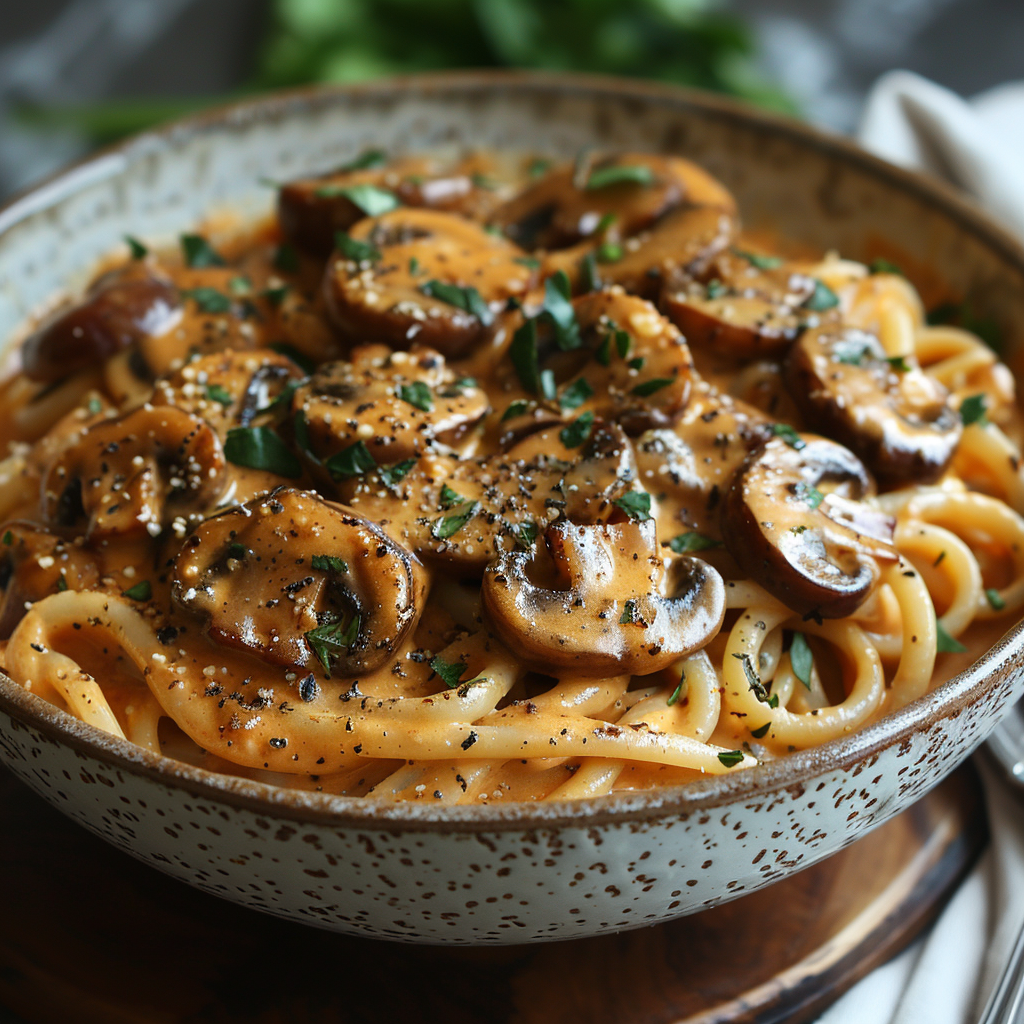
Easy Vegan Mushroom Stroganoff
So you want something cozy, creamy, saucy… but also don’t feel like chopping 47 ingredients or babysitting a pot all night?
Enter: Creamy Coconut Chickpea Curry – the “I want takeout but my bank account said lol no” solution.
It’s rich, mildly spicy (or not), full of tender chickpeas, and drenched in a silky coconut-tomato sauce that tastes like you put in way more effort than you actually did. Serve it over rice, scoop it up with naan, or eat it straight from the bowl like the absolute legend you are.
Why This Recipe is Awesome
Let’s break down why this curry deserves to be in your permanent rotation:
- Ridiculously easy. One pan, a few pantry staples, zero advanced skills. If you can stir, you can make this.
- Pantry-friendly. Canned chickpeas, canned tomatoes, coconut milk, and some spices. You might already have half of this stuff at home.
- Ultra creamy, totally dairy-free. Coconut milk does all the heavy lifting. No actual cream needed.
- Super filling. Chickpeas bring the protein, the sauce brings the comfort, rice or naan brings the carb happiness.
- Make it mild or spicy. You control the heat. Make it gentle and cozy or give it some drama.
- Great for leftovers. The flavors get deeper and better the next day. Future-you will be obsessed.
Basically, it’s weeknight-friendly comfort food that happens to be vegan and actually pretty wholesome.
Ingredients You’ll Need
Use this as your base. You can switch things up depending on what you have in your kitchen.
For the Curry
- 2 tablespoons coconut oil or neutral oil – to start the flavor party
- 1 medium onion, finely chopped – yellow or white
- 3–4 cloves garlic, minced – we’re not shy about garlic
- 1 tablespoon fresh ginger, grated – optional, but so good
- 2 cans (15 oz / 400 g each) chickpeas, drained and rinsed – our hearty stars
- 1 can (14–15 oz / 400 ml) full-fat coconut milk – for that lush creaminess
- 1 can (14–15 oz / 400 g) diced tomatoes – or crushed, if you prefer a smoother sauce
- ½–1 cup vegetable broth or water – to adjust thickness
Spices
- 2 teaspoons curry powder – mild or medium
- 1 teaspoon ground cumin
- 1 teaspoon ground coriander – optional but lovely
- 1 teaspoon turmeric – for color and subtle warmth
- ½–1 teaspoon garam masala – adds depth at the end
- ¼–½ teaspoon chili powder or cayenne (optional) – for heat
- ½–1 teaspoon salt, to taste
- ¼ teaspoon black pepper
For Serving
- Cooked rice – jasmine, basmati, or brown rice
- Naan or flatbread – if you want scooping action
- Fresh cilantro, chopped – for brightness
- Lime or lemon wedges – a little squeeze at the end = magic
Note: Don’t stress if you don’t have every single spice. You can still make a great curry with just curry powder + cumin + salt + pepper and maybe chili.
Step-by-Step Instructions
1. Sauté the Aromatics
- Heat coconut oil in a large pan or pot over medium heat.
- Add the chopped onion and cook for 5–7 minutes, stirring occasionally, until softened and lightly golden.
- Add the garlic and ginger and cook for another 30–60 seconds until fragrant. Try not to burn the garlic or it’ll go from “yum” to “oh no” quickly.
2. Add the Spices
- Sprinkle in the curry powder, cumin, coriander (if using), turmeric, and chili/cayenne (if using).
- Stir constantly for 30–60 seconds to toast the spices in the oil.
- This step is crucial. Toasting the spices = deeper flavor. If they start sticking, add a tiny splash of water and keep stirring.
3. Add Tomatoes and Simmer
- Stir in the can of diced (or crushed) tomatoes with all their juices.
- Cook for 3–5 minutes, letting the tomatoes break down and mingle with the spices.
- If it starts to look too thick or dry, add a splash of vegetable broth or water.
4. Add Chickpeas and Coconut Milk
- Stir in the chickpeas, coating them in the tomato-spice mixture.
- Pour in the coconut milk and stir until the sauce is smooth and everything looks nice and creamy.
- Add ½ cup vegetable broth or water to start. You can add more later if needed to adjust the thickness.
5. Let It Simmer
- Bring the curry to a gentle simmer (small bubbles, not wild boiling), then reduce the heat to low-medium.
- Let it cook for about 15–20 minutes, stirring occasionally.
- The sauce will thicken slightly as it simmers, and the flavors will deepen. If it gets too thick, add more broth or water in small splashes.
6. Finish with Garam Masala & Seasoning
- Stir in the garam masala toward the end of cooking (last 5 minutes). It’s a finishing spice blend that adds warmth and complexity.
- Taste and adjust:
- More salt if it tastes flat
- More chili if you want more heat
- A pinch of sugar or maple syrup if the tomatoes are too acidic (totally optional)
7. Add Brightness
- Turn off the heat and squeeze in a bit of lime or lemon juice—start with 1–2 teaspoons.
- Stir, taste again, and adjust. That little hit of acidity really wakes up the flavors.
8. Serve
- Spoon the curry over steaming rice or alongside warm naan/flatbread.
- Top with chopped cilantro, a crack of black pepper, and extra chili flakes if that’s your vibe.
- Try not to burn your tongue from eating it too fast. (No judgment if you fail.)

Common Mistakes to Avoid
Let’s sidestep the most common curry disasters:
- Using low-fat coconut milk. You can, but full-fat coconut milk gives you that truly creamy, restaurant-style texture. Low-fat tends to be watery and sad.
- Skipping the spice-toasting step. Stirring spices directly into liquid works, but toasting them in oil first makes a huge difference in flavor.
- Not salting enough. Chickpeas + tomatoes + coconut milk = they can handle more salt than you think. If the curry tastes “meh,” it probably needs more salt and a squeeze of lime.
- Boiling too hard. Fierce boiling can split the coconut milk and make the sauce grainy. Keep it at a gentle simmer.
- Adding too much liquid too soon. Start with less broth and add more gradually. You want creamy, not soupy—unless curry soup is your thing.
Alternatives & Substitutions
This curry is very chill. You can tweak it based on your mood, pantry, or level of effort.
- Different beans or lentils:
- No chickpeas? Use cannellini beans, butter beans, or cooked lentils.
- Add extra veggies:
Great options to toss in while the curry simmers:- Spinach or kale (stir in at the end until wilted)
- Cauliflower florets
- Bell peppers
- Green beans
- Peas
- Want it thicker?
- Simmer longer with no lid.
- Mash a small handful of chickpeas into the sauce.
- Want it milder?
- Use mild curry powder and skip the chili/cayenne.
- Add a little extra coconut milk to soften the spice.
- No coconut milk?
- Use cashew cream: blend ½ cup soaked cashews with 1–1¼ cups water until smooth.
- Or use a thick unsweetened soy or oat cream.
- Quick version:
- Use just curry powder + salt + pepper and skip the extra spices. Still tasty, just simpler.
- Gluten-free:
- Most of the ingredients are naturally GF—just make sure your broth and spices are certified gluten-free if you’re sensitive.
FAQ (Frequently Asked Questions)
1. Can I make this ahead of time?
Absolutely. In fact, this curry tastes even better the next day. Store it in an airtight container in the fridge for up to 4–5 days.
2. Can I freeze it?
Yes! Coconut milk-based curries usually freeze very well. Freeze for up to 2–3 months. Thaw in the fridge overnight, then reheat gently, adding a splash of broth or water if it’s too thick.
3. Is this curry spicy?
It’s as spicy as you make it. The base can be very mild if you use mild curry powder and skip the chili. Or crank it up with extra chili powder, cayenne, or sriracha.
4. Can I use fresh tomatoes instead of canned?
Sure! Use about 3–4 fresh tomatoes, chopped. You may want to cook them a bit longer so they break down and deepen in flavor, and maybe add 1 tablespoon tomato paste for richness.
5. My sauce looks curdled. What happened?
If the heat is too high, coconut milk can separate a bit. Don’t worry—it’s usually still fine to eat. Next time, keep it at a gentle simmer and avoid vigorous boiling.
6. What should I serve with it?
Top-tier pairings:
- Basmati or jasmine rice
- Garlic naan or flatbread
- A side of cucumber salad for something cool and crunchy
7. Can I double the recipe?
For sure. Just use a big enough pot and taste as you go—larger batches sometimes need a little extra salt, spices, or lime to balance things out.
This Creamy Coconut Chickpea Curry is one of those recipes that looks and tastes way more impressive than the effort it takes. It’s:
- Cozy and comforting
- Bright and flavorful
- Packed with plant protein
- Ridiculously easy to toss together
You sauté, stir, simmer, and suddenly you’ve got this golden, fragrant pot of curry that makes your whole kitchen smell like a win.
Now grab a can of chickpeas, a can of coconut milk, and your favorite pot—and go make yourself a bowl (or three) of curry that absolutely qualifies as self-care. 🍛✨
ChatGPT peut fair